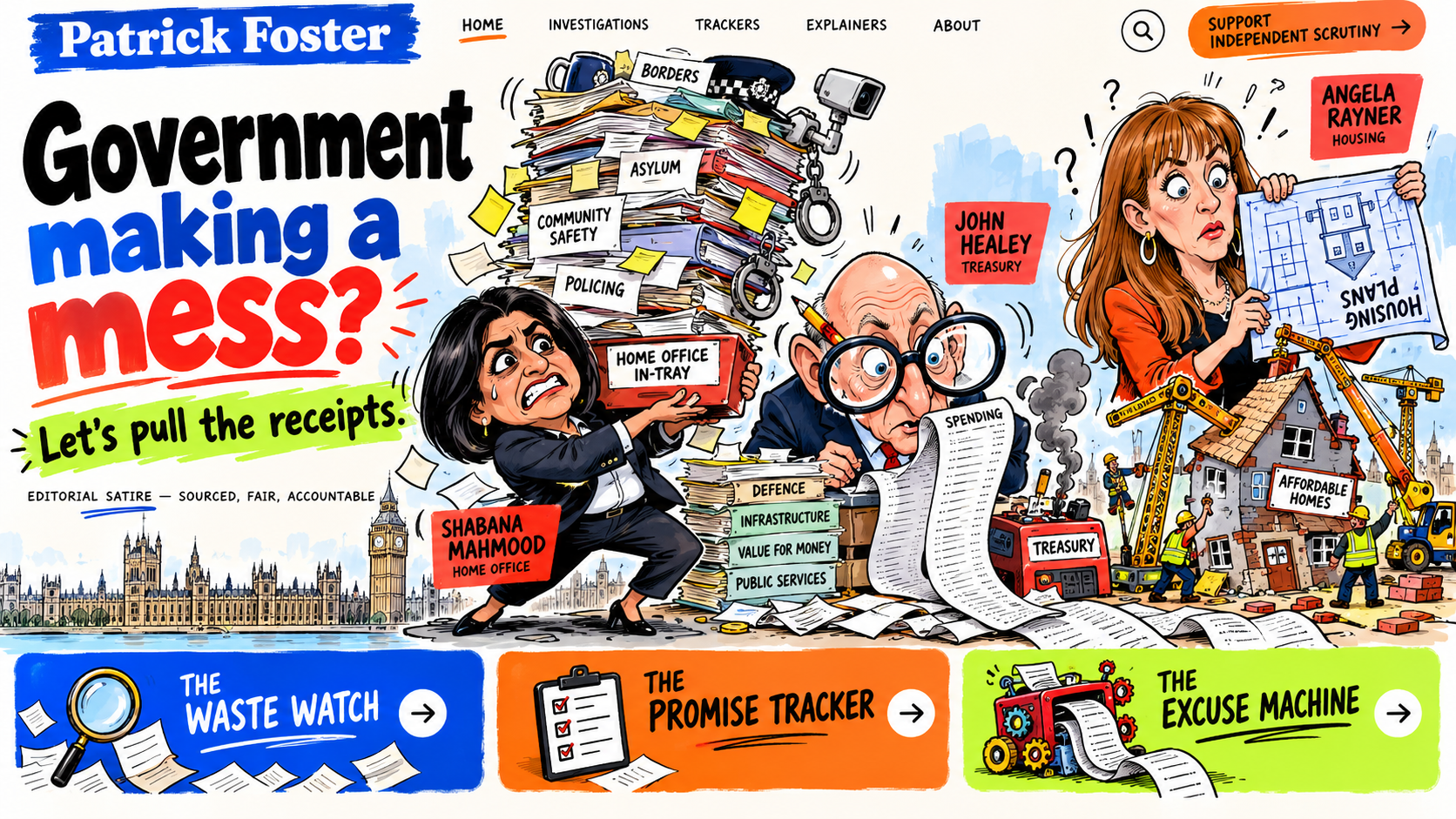
Public accountability. Proper answers.

Britain deserves competent government.

Follow the money, question the decisions, and give the people responsible a proper chance to answer.

The work

Challenge power with evidence people can check.

The Foster Standard is Patrick Foster’s independent public-accountability platform, focused on the decisions that affect people who live, work, raise families, pay tax and keep their communities going.

This platform follows the public money, the policy promises and the performance data. It gives public bodies a fair opportunity to answer, then puts both the evidence and response on the record.

The standard

How every campaign will be run

01

Source it

Material factual claims are linked to official documents, data or an identifiable primary source.

02

Ask for an answer

The institution responsible is asked to respond to substantive evidence before publication.

03

Demand a remedy

Every investigation ends with practical changes that can be measured and checked.

The campaign programme

Government is accountable in every area of public life.

The work will cover the policies, spending and service failures that shape everyday life. Each area is investigated through records, evidence submissions and clear questions to the people responsible.

Border control & asylum administration

Processing, accommodation costs, enforcement, transparency and the local consequences of national decisions.

Tax & cost of living

Household bills, food, fuel, fiscal drag, small business costs and whether public spending gives value.

Housing & local growth

Planning, social housing, infrastructure, empty homes and whether local communities are heard.

Public services

NHS access, SEND, social care, policing, courts, roads, transport and complaint handling.

Work & enterprise

Licensing, regulation, procurement, skills and the barriers faced by local employers and the self-employed.

Crime, safety & justice

Neighbourhood safety, anti-social behaviour, victims' experience and public confidence in outcomes.

Democratic accountability

FOI compliance, consultation, council spending, conflicts, decision records and public scrutiny.

Local government

Councils, public bodies and local partnerships: what they spend, decide, deliver and fail to explain.

Authority Watch

Government, councils and the public bodies that affect daily life.

Authority Watch is a searchable public directory. Start at the department or council that owns the decision, then follow the responsibility, evidence and response through a fair publishing process.

Directory live

489 public bodies, including 382 UK local authorities

The national council layer is now live, alongside central government, police, public services, regulators and ombudsmen. Enriched local profiles begin with separately verified official sources.

Open Authority Watch
  • 382 local authorities UK-wide, GSS-coded
  • 43 departments National government
  • 45 police forces Police & justice
  • 18 oversight & public bodies Services and scrutiny

Councils

County, district, unitary, metropolitan, London, Welsh, Scottish and Northern Ireland local authorities are listed.

Safety & justice

Police and probation: public safety, response, outcomes, accountability and performance.

Health & public services

NHS bodies, public health, public services and the organisations that oversee them.

Directory baseline: published authority records with available official links. Names and office-holders are refreshed before a profile is published.

Every Authority Watch profile carries the same six headings: responsibility; publicly accountable leaders; open issues; evidence; response sought; and action required.
First investigation

The Cost of Failed Government

This will be the first evidence briefing: a defined spending failure, what Government promised, what the documents show, and the cost carried by the public.

  • Set the exact question and public body responsible.
  • Build the source file from official reports, data and parliamentary records.
  • Request a formal response before publication.
  • Publish the evidence, response and three required actions.
Evidence first

A public platform that makes serious scrutiny possible.

Documents

Official reports, FOI disclosures, accounts, minutes, decisions and correspondence form the core record.

Experience

People can submit a concern with the relevant paperwork, dates and public body involved.

Corrections

Where the record is wrong or incomplete, it will be corrected clearly and promptly.

Direct public advocacy, conducted lawfully.Criticism will address policies, decisions and institutional performance. This platform does not publish personal information, encourage confrontation or make unverified allegations about individuals.
Evidence submissions

Have documents that deserve an answer?

Prepare a concise outline with the public body involved, dates, the decision or failure you are challenging, and copies or links to the key documents.

All submissions should be lawful to share. Do not include private medical information, children’s information, passwords or material covered by a court restriction.